Foreclosure papers and unopened bills
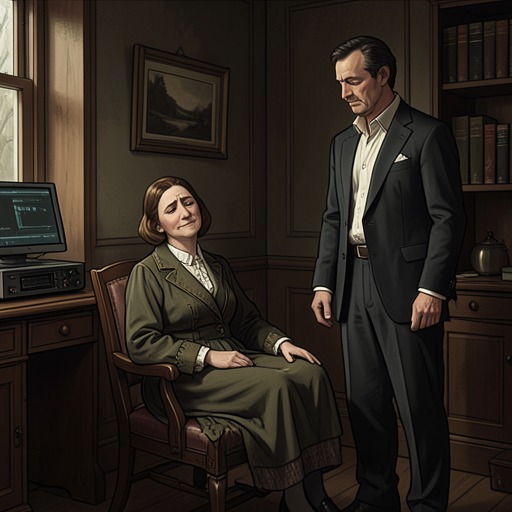
A Dog's JourneyThe foreclosure papers and unopened bills are the neglected documents through which CJ discovers that the household is in financial danger and that Gloria has spent money from the trust set up by CJ’s father. First encountered among papers in a room CJ normally never enters, they change from background clutter into evidence: the house is six months behind on payments, foreclosure proceedings are underway, and bills have been left unopened. Their importance lies not just in what they say, but in the confrontation and further disclosure their discovery sets in motion.
The papers in Gloria’s room
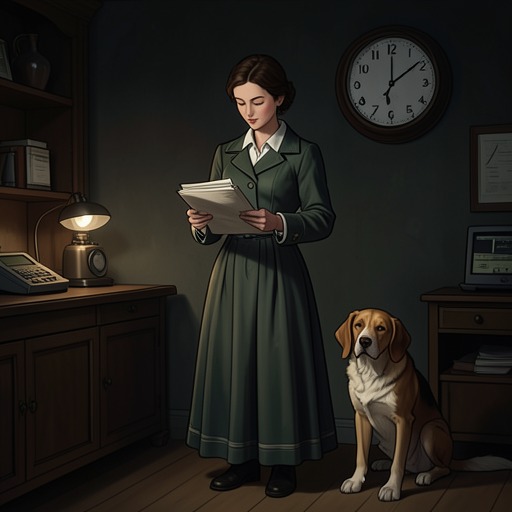
The documents emerge from a room associated with Gloria’s private routine. She liked to sit there and look at papers, and CJ had never gone in before. When CJ and Molly enter, however, the room offers no food or toys to explain why a dog might be interested in it. CJ searches the drawers while Molly curls up, expecting a nap. That contrast establishes the papers as objects of adult concern before their significance is known to Molly: the dog sees an uninviting room, while CJ is beginning to uncover information that will reshape her understanding of home.
The discovery interrupts this ordinary, divided scene. CJ reads something in the papers and quietly reacts with alarm. Molly hears the word no but does not take it as a reprimand; the disturbance belongs to what CJ has found, not to the dog’s behavior. CJ then leaves the room, angry enough to stomp down the hallway and call for Gloria. The papers thus move the crisis from a drawer into the household’s shared space, where its consequences can no longer remain private.
Evidence of foreclosure
CJ confronts Gloria with the papers rattling in her hands and asks whether the house is in foreclosure. Gloria first responds as though the documents are familiar but not fully understood. When CJ points out that the household is six months behind, Gloria questions whether that much time has passed. The papers make the arrears concrete: this is not a vague worry about money but a stated period of missed payments and a notice of foreclosure proceedings.
CJ explains the consequence she sees in the documents: without action, they will lose the house. Gloria mentions a possible loan from Ted Petersen, whom she describes to CJ as looking like a male model. That proposed source of money does not erase the danger revealed by the papers. Instead, it shows Gloria responding to the crisis through an anticipated loan while CJ is trying to establish how serious and immediate the documented situation has become.
The unopened bills and the argument
The foreclosure papers are not the only evidence in the desk. CJ points out that there are bills there that have not even been opened. Their unopened state gives the financial trouble a visible form: correspondence requiring attention has accumulated without being read. Gloria objects that CJ has been snooping in her desk, shifting the dispute from the contents of the documents to CJ’s right to see them. CJ answers that, because the house payments are behind, she has a right to know.
The papers therefore expose more than a balance due. They make secrecy and responsibility part of the same confrontation. Gloria had kept the documents in her room and desk; CJ’s search brings them into the open, and the argument concerns whether the information belongs only to Gloria or also to the person whose home and financial future are at stake. The bills’ unopened condition reinforces that disclosure does not arrive through a planned explanation: CJ finds the evidence herself, and the family must respond to it after the fact.
The trust behind the household finances
The argument develops beyond the mortgage when CJ asks whether Gloria took money from the trust established by CJ’s father. The disclosure follows CJ’s stunned stillness and her attempt to understand what Gloria is admitting. Gloria says there was not enough in the trust and insists that it was never simply CJ’s money, but money set up so CJ could live. She says that what she spent went toward CJ, naming food and the house as well as trips and a cruise.
This exchange gives the papers a wider significance without making them the sole record of the trust’s use. The foreclosure documents reveal the house’s immediate danger; the unopened bills show that other obligations have gone unattended; the confrontation then exposes a dispute over how the trust was spent and who had a claim to it. Gloria’s reference to the cruise makes the disagreement concrete: spending that she presents as part of providing for CJ is understood by CJ as an invasion of money belonging to her. The documents begin the reckoning, but the conflict they uncover reaches beyond the mortgage into the meaning of care, ownership, and disclosure within the household.